

Born This Winter?
When is the best time to Start Swimming Lessons
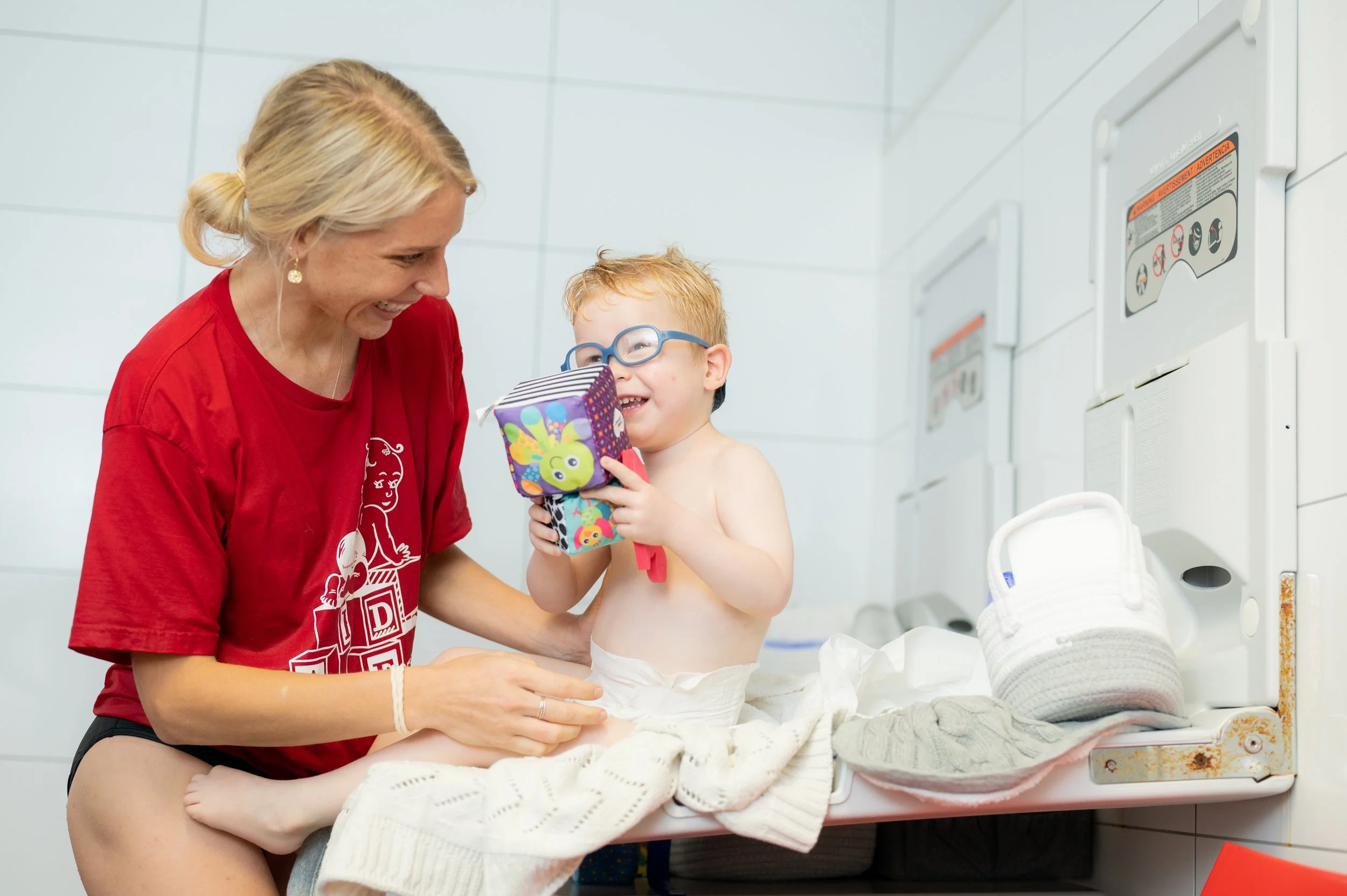
Babies can start swimming lessons from 4 months old. At SwimWorld Glen Waverley, our Tiny Tots programme is designed for parent-accompanied sessions in a pool heated to 32 degrees, year-round.
If your baby was born this winter, you are probably still deep in the fog of feeds, broken sleep and working out which cry means what. Swimming lessons are not the first thing on the list. That is completely normal.
But at some point in the next few weeks, usually around the time your baby starts holding their head up and noticing the world a bit more, a question tends to surface. When should we start?
The short answer is 4 months. That is the age babies can begin parent-accompanied lessons, and it is the age we welcome them into our Tiny Tots programme at SwimWorld. Not because it is a rule, but because by 4 months most babies have the head and neck control to be comfortable in the water, and most parents have found enough of a rhythm to add one more thing to the week.
What actually happens in a baby swimming lesson?
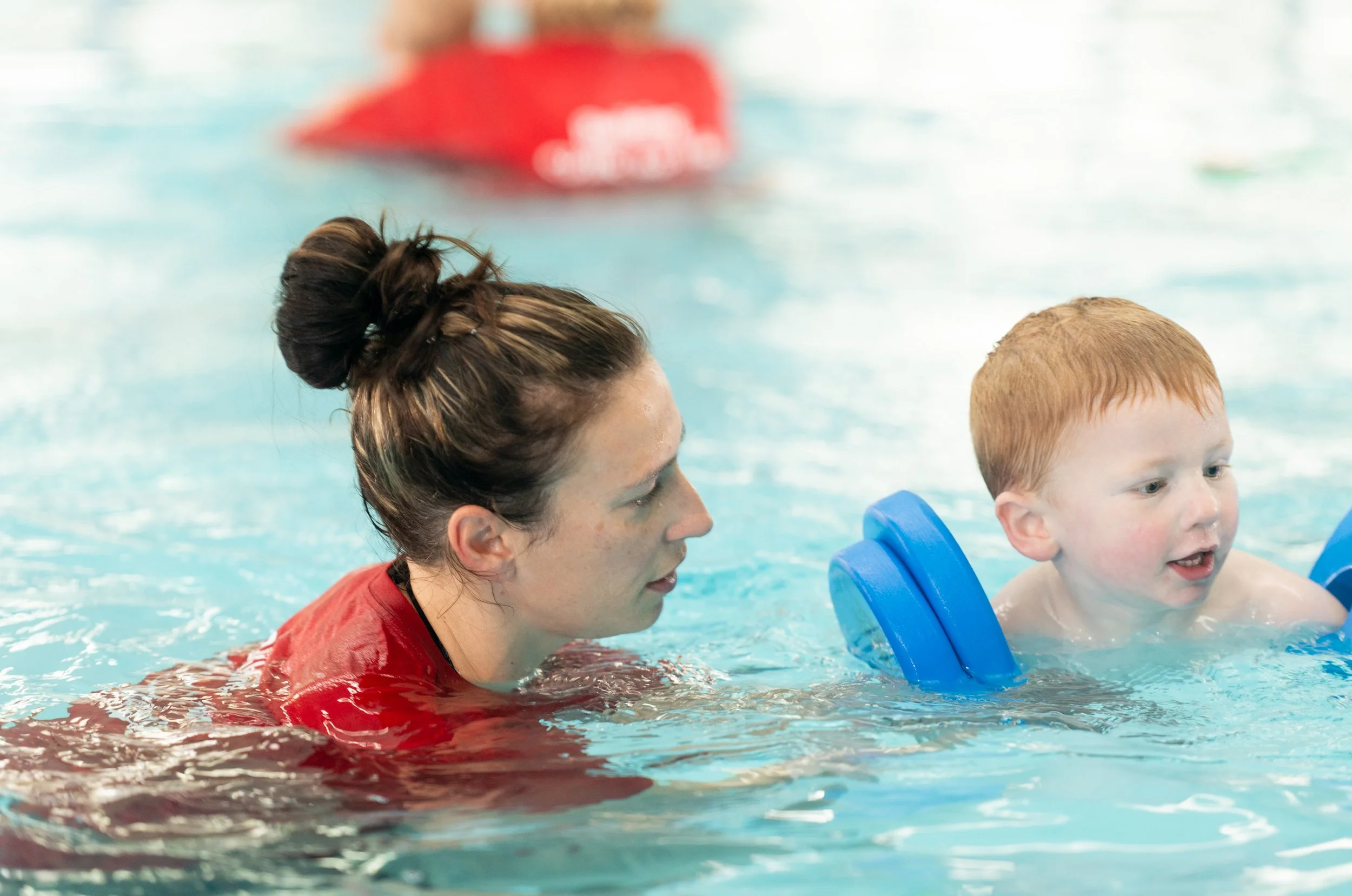
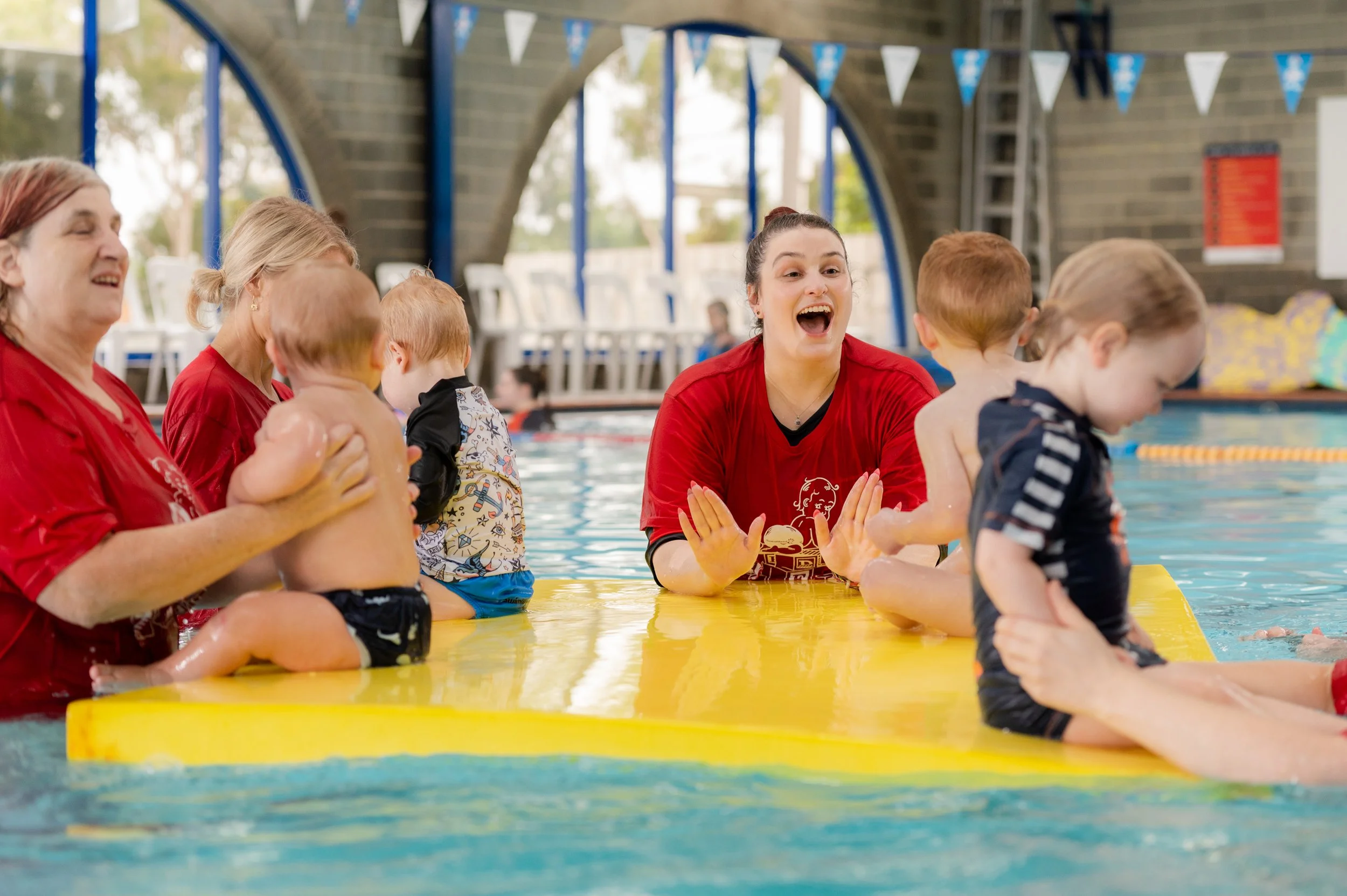
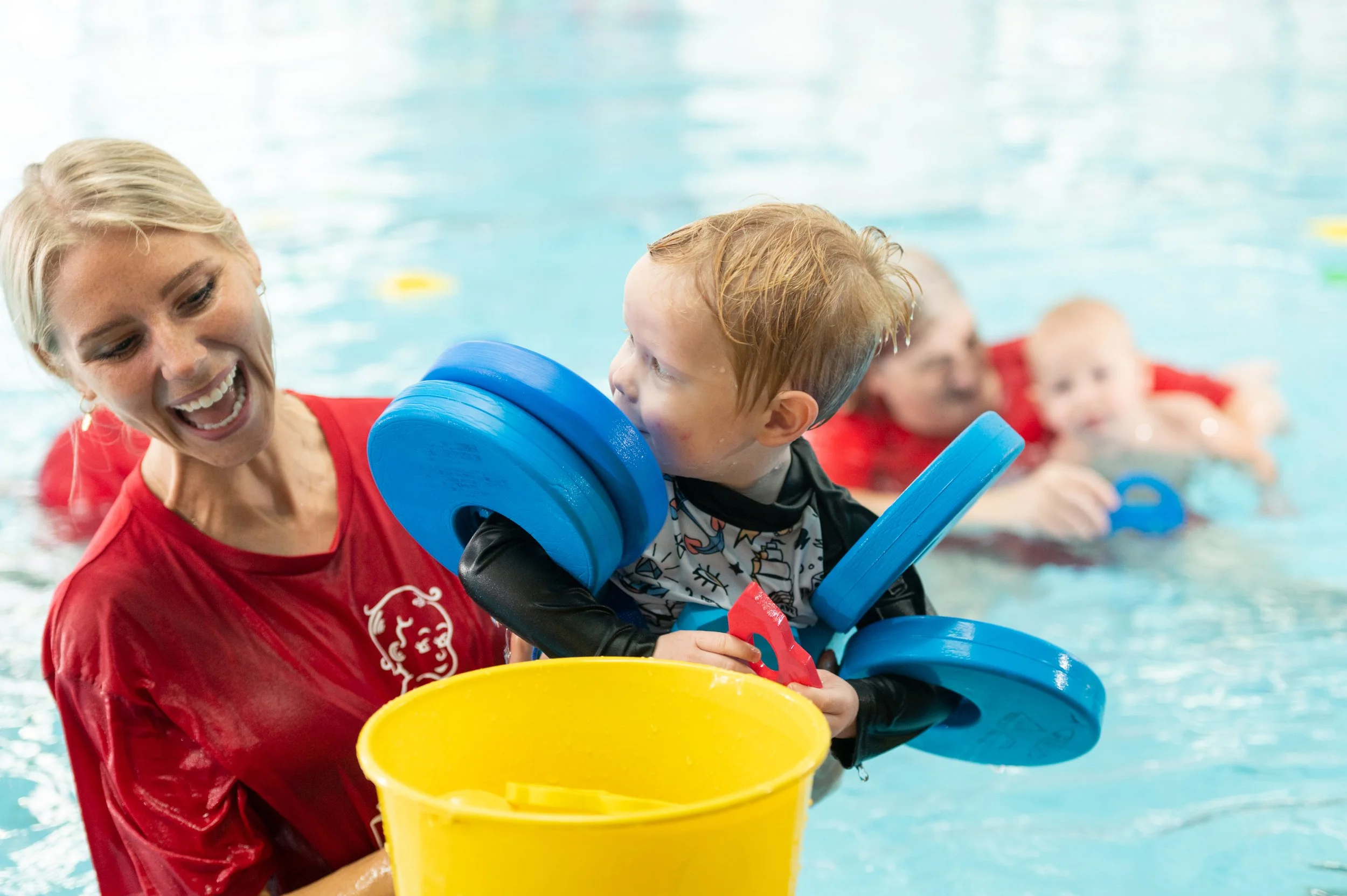
A baby swimming lesson is 30 minutes of structured water play in a warm pool, with a parent in the water the whole time, guided by a specialist swim instructor.
The sessions are small, specialised classes built around gentle submersions, supported floating, reaching and grasping, songs and movement patterns.
For most families, the first few sessions are about the parent relaxing as much as the baby. Once the parent settles, the baby settles. That is not a throwaway observation. A 2024 study published in Frontiers in Public Health by researchers at Beijing Sport University found that parent-accompanied swimming produced greater cognitive gains in preschool children than independent swimming or traditional exercise. The parent's presence was not incidental. It was part of what made it work.
Why starting in winter is not the disadvantage it sounds like
There is a common instinct to wait for warmer weather, and it makes sense on the surface. But indoor heated pools do not have a season. Our pool sits at 32 degrees every day of the year, which is warmer than most baths and warmer than any outdoor pool you will find in Melbourne at any time of year.
Starting in winter also has a quiet practical advantage. You get the benefit of a smaller, more settled environment during the exact weeks your baby is learning what the water feels like for the first time.
And there is a developmental window worth knowing about. A 2024 controlled study out of Warsaw, published in the journal Healthcare, tracked 43 infants aged 3 to 12 months and found statistically significant motor development improvements in the group that participated in water activities compared to the control group. A 2022 study led by Borioni and published in Perceptual and Motor Skills found that just 10 weeks of baby swimming improved gross motor skills, fine motor skills and cognitive flexibility, including something called inhibition speed, which is a building block of executive function.
A few things matter more than others when your baby is under 12 months.
Water temperature. Babies lose body heat faster than adults. A pool below 30 degrees is too cold for an infant lesson. At SwimWorld, the pool is 32 degrees, heated by 48 solar panels with gas backup, every day of the year.
Class size. Small, specialised classes for added attention.
Parent in the water. At this age, the parent is not a spectator. You are in the pool, holding your baby, learning alongside them. The research supports this, and so does common sense. Your baby's nervous system is calibrated to you. When you are calm and present, they are calm and present.
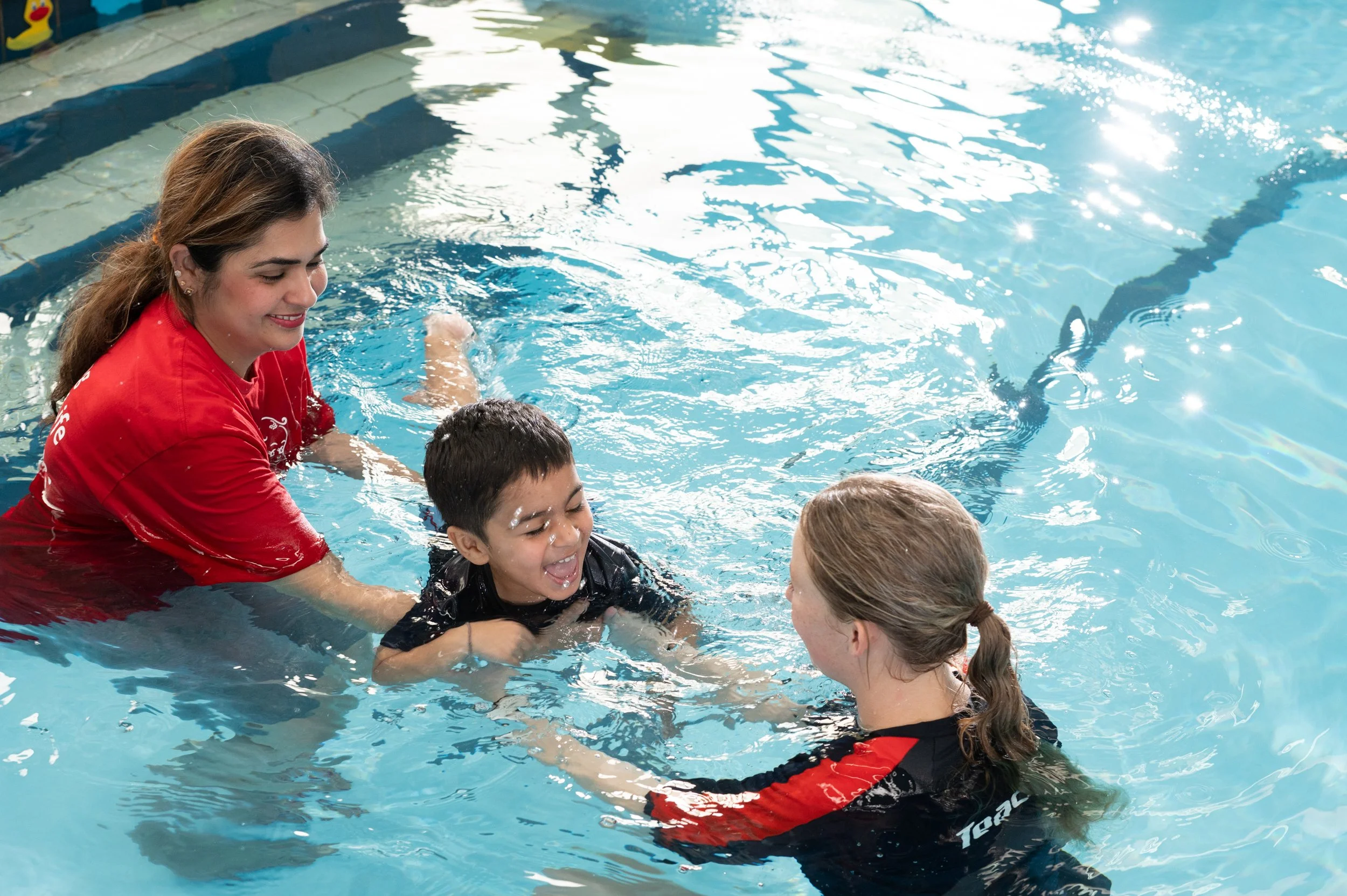
Specialist infant instructors. Not every swimming instructor is trained for babies. Ours are.
Consistency over intensity. One 30-minute session a week, every week, is more effective than a two-week intensive followed by a long break. The rhythm matters.
What to look for in a programme for a winter babY
What a winter start actually looks like, week by week
-
Your baby is taking it in. Wide eyes, sometimes a bit of a startle at the water, then settling. You are learning how to hold them, how to move through the water together. The instructor is leading, you are following.
-
Your baby starts to anticipate. They know the routine. They recognise the instructor's voice. You start to feel less like you are managing the situation and more like you are enjoying it.
-
This is where the physical changes start to show. Reaching is more deliberate. Kicking is more rhythmic. Supported floating gets longer. Some babies start blowing bubbles, which is an early sign of breath control.
-
By now, your baby has a genuine relationship with the water. They are comfortable being submerged briefly. They are moving with purpose. And you, as a parent, are watching something you helped build.